

A Journey Through Refuge, Solidarity, Justice & Hope
A program for lawyers, judges, and their families, with
Justice David Wecht · Supreme Court of Pennsylvania
Pedro Rodriguez · Former Civil Service Commissioner of Philadelphia
February 11–15, 2027 | President’s Day Weekend | Sosúa, Dominican Republic
Itinerary
Thursday: late check-in
Friday
- Meet with Dominican judges
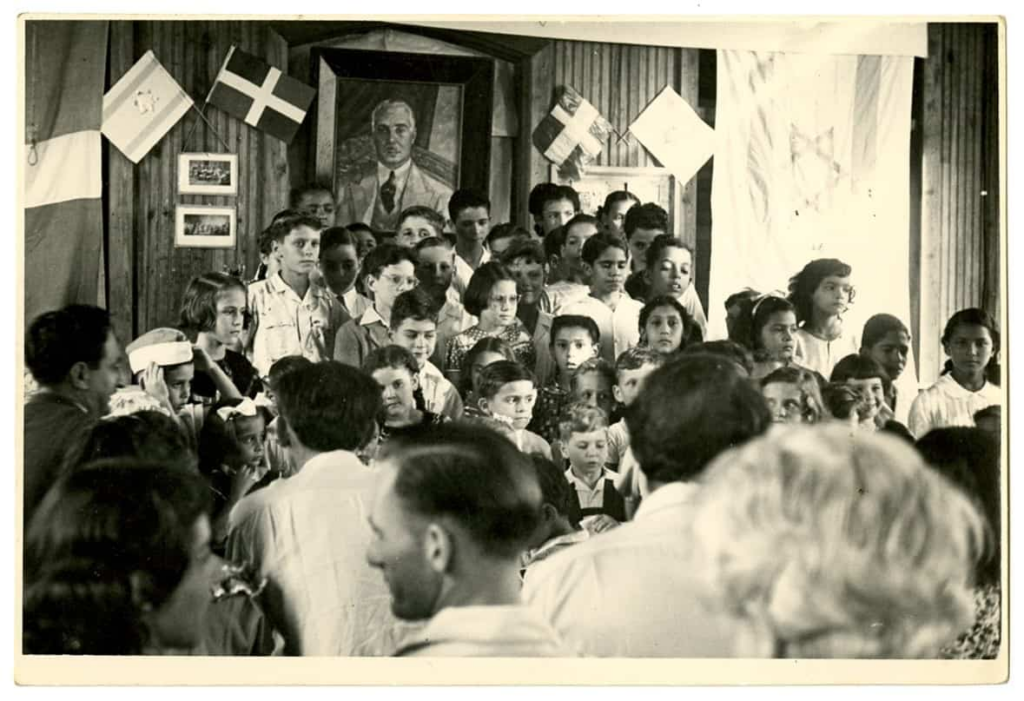
- Learn about Jewish refugees arriving from Nazi-occupied Europe
- Interfaith Shabbat dinner
Saturday
- Tour a corrections facility
- Tour a police station
- Criminal Justice panel
Sunday
- Excursion to Cayo Arena
Monday/President’s Day
- Return home
Continuing Education Credits Available
3 Pennsylvania CLE Credits Approved
The Journey
This is not simply a historical tour.
It is an opportunity to experience the Dominican Republic through the intersection of Jewish history, Dominican history, justice, community, and human connection.
More Than a Tour
The most meaningful travel does more than show us somewhere new.
It introduces us to people we would never otherwise meet. It challenges assumptions. It makes history tangible. And sometimes, it changes the way we understand our own communities when we return home.
Dominican Allies & Jewish Resilience has been designed for judges, attorneys, spouses, partners, family members, friends, and others interested in this extraordinary history and the conversations surrounding it.
You do not need to work in the legal profession to participate.
Travel With Distinguished Hosts
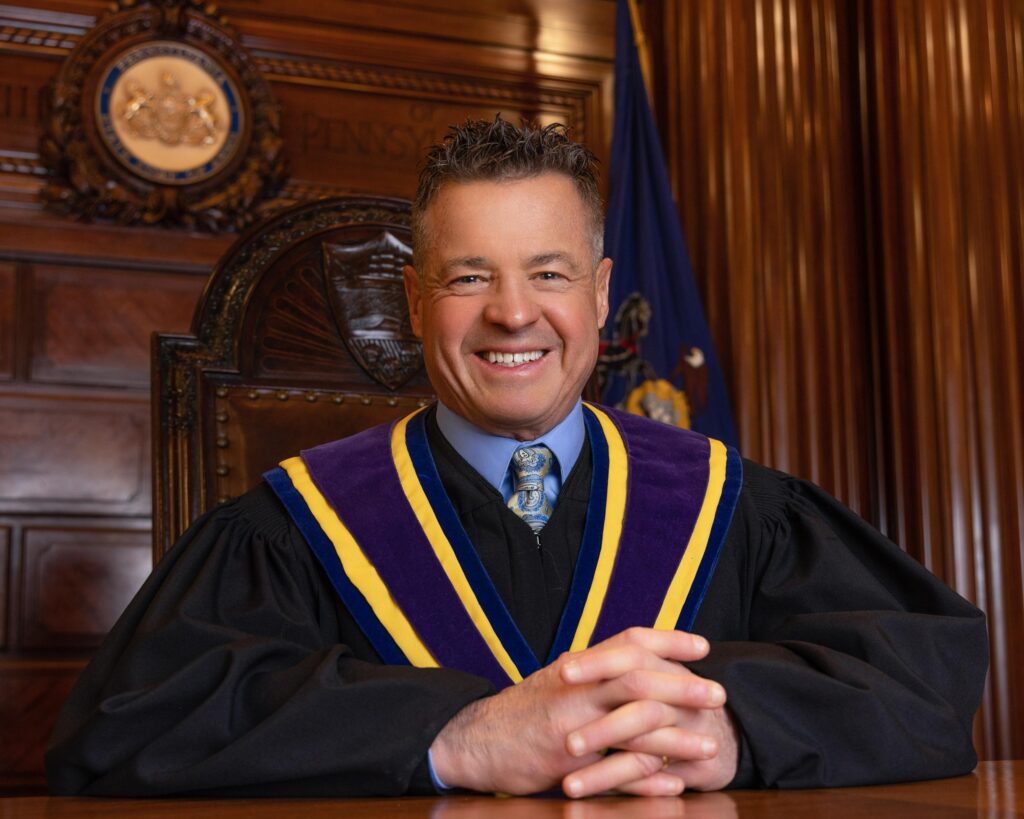
Justice David Wecht, Supreme Court of Pennsylvania
Justice Wecht will help lead conversations examining justice, courts, public institutions, human dignity, and the responsibilities societies assume.
Learn More about Justice Wecht
David N. Wecht was elected to a ten year term on The Supreme Court of Pennsylvania in November 2015. He was retained for a second ten year term in the November 2025 election.
Pennsylvania’s courts are among the oldest in North America, long predating the
nation’s independence. The Supreme Court of Pennsylvania was formally established by the Commonwealth’s Judiciary Act of 1722, and traces its roots to the Provincial Appellate Court created in 1684 under the auspices of William Penn.
Prior to joining the Supreme Court, Justice Wecht served as a Judge of The Superior Court of Pennsylvania from January 2012 to January 2016, and as a Judge on The Court of Common Pleas for Pennsylvania’s Fifth Judicial District from February 2003 to January 2012.
From January 2009 to January 2011, Justice Wecht served by appointment of the Supreme Court of Pennsylvania as Administrative Judge of the Fifth Judicial District’s Family Division, which encompasses both domestic relations cases and cases of juvenile dependency and delinquency. As Administrative Judge, Justice Wecht designed and implemented several reforms and innovations, including the Unified Family Court, the local rule on parenting coordination, and improved conflict counsel appointments in juvenile cases.
Prior to taking the bench, Justice Wecht was twice elected as the Allegheny County Register of Wills and Clerk of Orphans’ Court. In that capacity, he pioneered innovations that included creation of a free will consultation program for seniors and authorship of a state law that prevents accused murderers from controlling their victims’ estates.
Justice Wecht is a 1984 Summa Cum Laude, Phi Beta Kappa graduate of Yale, where he was a National Merit Scholar and earned Yale College Distinction in both history and political science. At Yale Law School, Justice Wecht was selected as Notes Editor of the Yale Law Journal, and as an Editor of both the Yale Law & Policy Review and the Yale Journal of International Law. While a law student, Justice Wecht also volunteered as a certified legal intern in the Office of the State’s Attorney in New Haven, Connecticut, and provided pro bono legal assistance to inmates of the Green Haven Correctional Facility in Stormville, New York.
After graduating from Yale Law School in 1987, Justice Wecht served as Law Clerk to U.S. Circuit Judge George MacKinnon on the U.S. Court of Appeals for the D.C. Circuit in Washington, D.C., and received the Award for Distinguished Service in that position. From January 1989 until taking the bench in February 2003, Justice Wecht continuously practiced law, first at Williams & Connolly in Washington, DC, then at Katarincic & Salmon in Pittsburgh, PA, and finally at The Wecht Law Firm in Pittsburgh, PA. He was licensed to practice in New York, Pennsylvania, and Washington, D.C., and was admitted to the bar of numerous state and federal courts, including The Supreme Court of the United States.
A frequent lecturer to bench, bar, and community groups throughout Pennsylvania and in several other states, Justice Wecht also served for many years on the faculties of the Thomas R. Kline School of Law of Duquesne University, the College of General Studies of the University of Pittsburgh, the Harry Radzyner Law School of Reichman University (Israel), and the East China University of Political Science and Law. Justice Wecht’s extra-judicial writings have appeared in a number of publications, including the Yale Law Journal, Gonzaga Law Review, Widener Commonwealth Law Review, Harvard Journal of Law and Public Policy, Duquesne Law Review, Pennsylvania Bar Quarterly, Pennsylvania Lawyer, Pennsylvania Family Lawyer, Pittsburgh Legal Journal, Tablet, Pittsburgh Post-Gazette, Pittsburgh Jewish Chronicle, Midstream, and others. Justice Wecht also has served as a Fellow or Member of several professional organizations, including the American Law Institute, the Allegheny County Bar Foundation, and the Executive Committee of the Pennsylvania Conference of State Trial Judges. He has volunteered his time to a number of governmental, civic, and community boards and groups, including the Parent Education & Advocacy Leadership Center, the Pennsylvania Supreme Court’s Domestic Relations Procedural Rules Committee, the Law Enforcement Advisory Committee of the Pennsylvania Commission on Crime and Delinquency, the Criminal Justice Advisory Committee of the Community College of Allegheny County, the Pennsylvania Juvenile Court Judges Commission, and others.
Justice Wecht was born in Baltimore, Maryland, and raised in Pittsburgh, Pennsylvania. He grew up in Pittsburgh’s Squirrel Hill section, and graduated from Shady Side Academy in 1980. Justice Wecht and his wife Valerie were married at Pittsburgh’s Tree of Life Congregation, on whose Board of Trustees he served. Justice Wecht and his wife continue to live in Allegheny County, where they raised four children, all of whom are now adults.
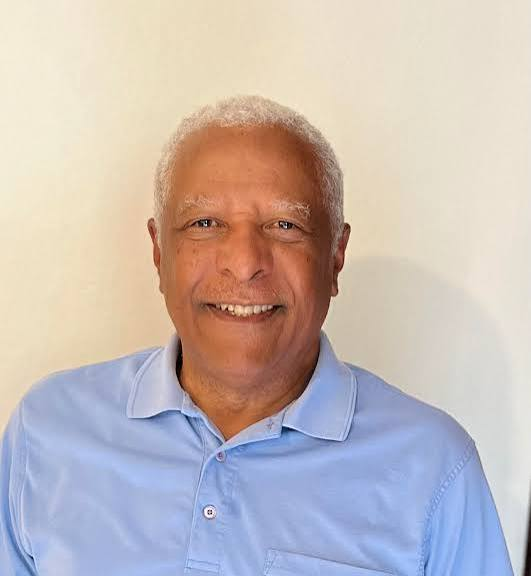
Pedro Rodriguez, Former Civil Service Commissioner of Philadelphia
Pedro Rodriguez brings decades of experience in public service and institutional leadership to conversations connecting the Dominican Republic, Philadelphia, and the broader questions of justice and community at the heart of this journey.
Learn More About Pedro Rodriguez
Pedro Rodriguez is President and CEO of Café Don Pedro, a Philadelphia-based specialty coffee roasting company he founded in January 2024. A seasoned public-sector leader and community builder, Rodriguez brings decades of experience at the intersection of government, nonprofit leadership, and grassroots organizing.
Rodriguez previously served as Director of Partnerships for Philly Counts 2020, a mayoral initiative to ensure a fair and accurate count in the decennial U.S. Census. Before that, he was Director of the Office of Human Resources for the City of Philadelphia, appointed in 2016 by the Civil Service Commission following six years of service as a Commissioner under Mayor Michael Nutter. He currently hosts the podcast Neglected Stories: People, History, Movements, airing on Gtownradio.com and available on all podcast platforms.
His career reflects a deep commitment to community empowerment. Rodriguez has led and strengthened numerous organizations, including serving as Director of Open Borders Project (Proyecto Sin Fronteras), where he expanded access to English language instruction, digital literacy, and youth programming in North Philadelphia. Earlier, he spent a decade with the Action Alliance of Senior Citizens, rising from Legislative and Healthcare Organizer to Executive Director. His public service career also includes roles as Assistant Director of the Philadelphia Empowerment Zones under Mayor Ed Rendell and Legislative Director to City Councilman Dan McElhatton.
Rodriguez holds a Bachelor’s degree in Economics from the State University of New York at Oneonta and has completed advanced training in community organizing, human resources, and community economic development.
A respected civic leader, Rodriguez serves on the boards of several prominent organizations, including Germantown Relief Society, Northwest Victim Services, G-Town Radio (92.9 FM), World of Opportunities, Building Our Lives Together (BOLT), Bread & Roses Community Fund, and the Union Benevolent Association. He has also contributed as an AIDS educator with Congreso de Latinos Unidos and as Associate Editor of Community Focus/Enfoque Comunal, Pennsylvania’s largest bilingual newspaper in the 1990s.
In addition to his executive leadership, Rodriguez has spent more than 17 years as a part-time professor of Spanish language and literature in Center City Philadelphia. In 2021, he was elected Chairman of the Germantown Relief Society, one of the nation’s oldest charitable institutions.
Rodriguez’s contributions have been widely recognized. He was named Citizen of the Year by the Dominican Parade and Festival Committee of Philadelphia and serves as President of the Dominican Electoral Commission for Pennsylvania and Delaware.
He is married to Pamela Waltz and is the proud father of two children: Anadelia, a graduate of Philadelphia University, former Peace Corps volunteer, and public servant in Washington, DC; and Daniel Rodriguez, a graduate of Princeton University, now working in Washington, DC.
Outside of his professional and civic commitments, Rodriguez is an avid racket sports enthusiast, enjoying padel, squash, pickleball and other court sports in his free time.
A Remarkable Story Few Americans Know
When much of the world closed its doors to Jews fleeing Nazi persecution, the Dominican Republic offered refuge.
In Sosúa, Jewish refugees built new lives, established a community, and became part of a remarkable chapter in both Dominican and Jewish history.
But this journey is about more than looking backward.
Over five days, we will explore questions of refuge, justice, institutional responsibility, human dignity, and what it means to stand with another community in moments of crisis.
Through history, conversation, encounters with Dominican legal professionals, and time together as a group, Dominican Allies & Jewish Resilience brings these questions to life in a way that a classroom, lecture, or traditional vacation cannot.
Experience the Story of Sosúa
Watch an ILI Travel journey through Sosúa and discover the history behind this extraordinary community.
Highlights Include
Tour Sosúa & Explore Jewish-Dominican Solidarity
Walk through the community where Jewish refugees rebuilt their lives and discover the relationships that developed between Jewish newcomers and their Dominican neighbors.
Visit the Sosúa Jewish Museum & Historic Sites
Encounter the people, photographs, places, and stories behind one of the most unusual refugee communities of the Holocaust era.
Meet With Dominican Judges
Engage directly with members of the Dominican judiciary and compare perspectives on courts, justice, legal institutions, and public trust.
Tour a Corrections Facility
Gain a firsthand perspective on the Dominican criminal justice system and consider similarities and differences between approaches to incarceration and rehabilitation.
Dominican Panel on Criminal Justice
Hear directly from Dominican legal and justice professionals and participate in a cross-cultural discussion about justice and institutional responsibility.
Interfaith Shabbat Dinner
Share an evening of reflection, conversation, food, and community connecting Jewish memory with the relationships being built during the journey.
Guided Reflection & Conversation
Throughout the trip, we will create time to process what we are experiencing and connect history with contemporary questions about justice, identity, refuge, and responsibility.
Why Sosúa Matters
In the years surrounding the Holocaust, countries throughout the world severely restricted Jewish immigration.
The Dominican Republic became one of the few places willing to accept significant numbers of Jewish refugees.
Those who reached Sosúa encountered an unfamiliar language, climate, economy, and culture. Together with Dominican neighbors, they created farms, businesses, institutions, friendships, and a community.
Their story contains extraordinary generosity and courage—but it is also part of a complicated history worthy of serious examination.
Nearly ninety years later, Sosúa offers a powerful setting in which to ask enduring questions:
- Who receives refuge?
- What obligations do nations have toward people in danger?
- What makes institutions worthy of public trust?
- How do communities separated by religion, nationality, and experience become allies?
- What responsibilities do we have to one another?
Program Pricing
Double Occupancy: $4,495 per person
Share a hotel room with another participant.
Single Occupancy: $5,295 per person
Enjoy a private hotel room throughout the program.
Traveling With Someone?
Participants registering for double occupancy should provide the name of their preferred roommate during registration.
Traveling with a spouse, partner, friend, or family member? Each traveler should complete an individual registration.
Flying to the Dominican Republic
Participants may arrange their own airfare.
ILI Travel will provide recommended arrival and departure windows so travelers may take advantage of scheduled group airport transportation.
Travelers who prefer a private arrival and departure experience through Puerto Plata International Airport during the day (POP) and from Santiago International Airport (STI) during the evening may add the $300 round-trip VIP Airport Transfer during registration. Otherwise group transfers are provided. Please be advised that POP is the preferred airport but STI will have more flights. Direct flights are available out of EWR, JFK, and MIA. Otherwise expect connecting flights.
What Your Program Includes
- Hotel accommodations in the Sosúa area
- Daily program transportation
- Scheduled airport transportation for travelers arriving within designated group transfer windows
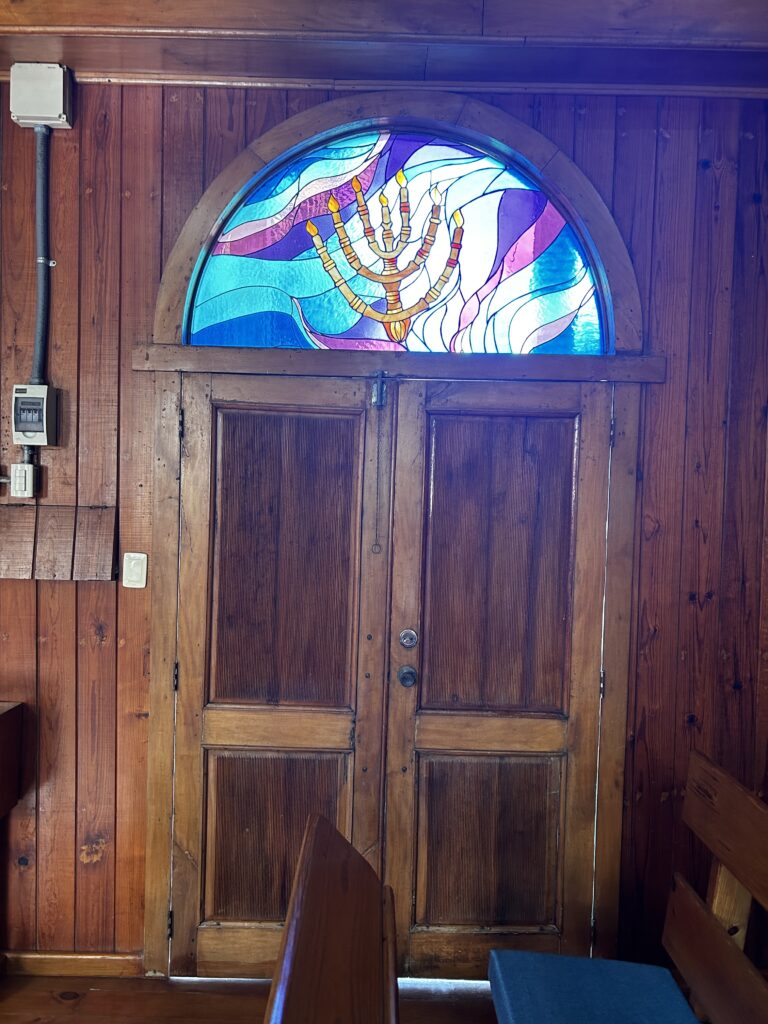
- Guided Jewish heritage programming in Sosúa
- Meetings and conversations with Dominican judges and justice professionals
- Corrections facility visit
- Dominican criminal justice panel
- Interfaith Shabbat Dinner
- Cultural and historical programming
- Group meals and experiences included in the final itinerary
- ILI Travel leadership and coordination
- Pre-departure information and traveler support
- On-the-ground support throughout the program*
- Schedule is tentative and adjustments are possible
Continuing Education Credit
3 Pennsylvania CLE Credits Approved | CJE Approval Pending
Not Included
International airfare, personal purchases, travel insurance, activities or meals specifically identified as optional, and transportation outside scheduled program arrangements.
Come With Us!
Spend President’s Day Weekend experiencing one of the most remarkable intersections of Dominican and Jewish history while engaging with people working inside the Dominican justice system today.
Come for the history. Come for the conversations. Come for the relationships. Come prepared to see both the Dominican Republic—and some of the questions facing our own society—in a different way.
February 11–15, 2027
Sosúa, Dominican Republic
Double Occupancy: $4,495 per person
Single Occupancy: $5,295 per person
Limited to 55 participants
Registration & Payment
Space is limited to 55 participants.
Double Occupancy — $4,495
$1,000 due at registration
$1,500 due November 15, 2026
$1,995 balance due December 15, 2026
Single Occupancy — $5,295
$1,400 due at registration
$1,700 due November 15, 2026
$2,195 balance due December 15, 2026
Registration is not complete until the initial payment has been received.